pring is in the air and before you know it summer will be upon us. Summer is when many enter the job market for the first time and receive an introduction to the world of taxes. In this month's issue is an outline of what to expect. There are also articles on creative ideas to help reduce the burden of college costs, a review of consumer inventions, and ideas to help improve your financial condition.
As always, should you know of someone who
may benefit from this information please feel free to forward this
newsletter to them.
A First Job
Your Introduction to Taxes
As school winds down, a number of students will hit the job market for summer employment. When this is a first job, it is often one of the first times you experience the world of taxes. If this is you or someone you know, please use this information to help make the move to the workforce a little more understandable.
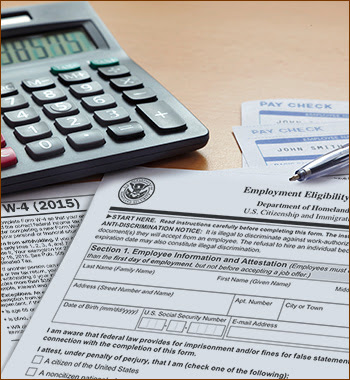
 | Your I-9 information. When you get the job, your new employer will have you fill out tax form I-9, Employment Eligibility Information. This is a legal requirement to show you have the right to work and it confirms your tax information. You will be asked to provide proof of identity, including showing your Social Security card. |
| Your W-4. You will also be asked to fill out a tax withholding form. This form gives employers instructions on how much they should withhold from your paycheck to send in to taxing authorities like the IRS. By filling out the form correctly, enough will be withheld from your pay to ensure you do not owe too much in tax when you file your tax return. |
| 
|
| Other Taxes. You will notice your check amount is also reduced for your contributions to Social Security and Medicare. Your paycheck will be reduced by 6.2% for Social Security and 1.45% for Medicare payments. You are not in this alone. Your employer matches your payments and sends both of them to the government. |
| On your own? If you start up your own summer business like mowing lawns or providing nanny services you will have tax obligations similar to those as an employee. In addition to income taxes, you will need to file estimated tax statements to cover Social Security and Medicare taxes. These two taxes amount to 15.3% of your net income so plan accordingly. But also remember to save receipts for your job related expenses. They can help reduce your taxable income. |
| Tips are taxed. If you receive any tips, these too are taxable. Most employers that have tip-earning employees will help you file the appropriate forms. If they do not, you will need to ask for help to ensure your taxes are paid on your tip income. |
| Review your pay. Remember to review your initial paycheck. Often times there are errors in setting up employee records. Should you find an error or need an explanation, feel free to ask your employer for help. Errors not caught early can become expensive surprises later on during the year. |
| Review your tax-filing obligation. Remember to review the need to file a tax return at the end of the year, even if you do not owe tax. Often your W-2 has pay withheld from your check. If you do not file a tax return you cannot get excess withholdings paid back to you. |
|
|
Five Interesting Consumer Inventions
Here are five inventions that have the potential to impact you and those you know during the upcoming year. Will they be in your near future?
 | 3-D printers. While the ability to print three-dimensional objects has been around for a while, the affordability and flexibility of recent offerings is making this invention more accessible. Now virtually anything can be created with these new devices. Things like plastic parts, toys, food, and even medical applications are being created with these printers. |
 | Smart Watches. From newcomer Pebble, to big manufacturers like Sony, Google, Microsoft, and Apple it seems like everyone is getting into the smart watch game. A smart watch puts popular phone technology onto your wrist. Besides telling time, this new device can set appointments, play music, and many other applications previously only found on computers, tablets, or smart phones. |
 | Ringly. An alternative to the smart watch is Ringly, a "smart" ring. The ring flashes different colors to alert you to an email, text, or message from someone you know. With this new development, your phone can stay in your purse until Ringly signals you someone important is trying to contact you. |
 | Selfie-Stick. This new product is popping up all over. The selfie-stick allows you to attach an extension onto your phone to take the ultimate selfie photo. A simple button on the handle or on a remote allows for candid photos without the need of assistance. |
 | 3D video gaming. Immersing yourself into your video world is now becoming a reality. 3D technology is moving to headgear that brings you into your gaming world. Are you ready to experience total immersion into your video games? |
|
Change a Little... Save a Lot
Changing your financial situation can seem to be an overwhelming task. Like most large problems, the best way to address them is to break them down into smaller, more manageable problems. The same holds true with your financial well being. Here are five small ideas that can yield big results to help improve your financial health.
 | Make incremental payments on debt as soon as possible. Make extra principal payments on your debt as often as possible and as soon as possible. The way bank amortization schedules work, you pay most of your interest during the early months of your loan repayment.
| Example: |
| $200,000 loan; 30 years repayment; 4.5% interest. |
|
| The monthly payment is approximately $1,013. |
| Payment | Interest | Principal |
| First | $750 | $263 |
| Last | $4 | $1,009 |
|
|  |
 | Cut out one annuity bill. Gone are the days when you buy something and then you are done. Now you pay a monthly fee for as long as you use a service. Examples of this are software licenses, cloud storage, television viewing, cell phone services and more. Why not cut out one such service. Put the savings aside for a better use. |
 | Eliminate one add-on service. Take a look at bills that have a number of add-on services. Cell phone and internet bills are likely candidates. Do you need that special cable package? Do you fully use your cell phone data plan? Look for ways to cut a little bit out of each of your bills. |
 | Pay yourself. When you pay your bills, pay yourself. Place the funds in a hard to reach banking account. Ideally one that does not have internet access. Set a financial goal for this money. It might be to pay for a fun vacation or a special purchase. You will receive a double benefit from this approach. One for hitting your savings goal and one for the joy of purchasing something you want without going into debt. |
 | Conduct a competitive review. Key suppliers rely on our inertia. When was the last time you reviewed your auto and home insurance? What about other service providers like cell phones or trash pick up. Choose a service and solicit three vendors to provide competitive quotes. Your current supplier might still be the best, but you will never know if you don't periodically check. |
|
Financing for College? Be Creative.
Can you or your child manage to graduate from college without having a mountain of debt? The Federal statistics suggest it is unlikely. But if you are creative, perhaps you can reduce the financial burden you are facing.
Creative funding does not replace the basics
Remember to fill out the FAFSA and submit it on time. This is the federal blueprint to get your aid package. Also check reliable sources to ensure you are taking advantage of the common available support. High School guidance counselors and prospective colleges are great resources to help you understand what is available for you.
A web site like the non-profit Collegeboard.org is a great place to start. This site has resources to help walk you through the financial aid process and it has tools to help search for scholarships. | 
|
Some creative ideas
Here are some, beyond the obvious, ideas to help augment money to pay for school.
 | Tutor. If you are good in math, writing, or any other subject consider tutoring others to earn some additional income. You can schedule this around your class time and can feel good about helping other students. |
| Work study. Some financial aid packages include a work study element. But if you don't qualify for traditional work study think creatively. Are there privately run businesses on or by campus? Perhaps the local coffee shop needs help. Is there a little retail store students go to for supplies? Go where the students go, they are targets for employment. |
| Be an entrepreneur. Campuses are like small towns. The students need services. Computer repair, transportation, hair services, running errands, and more. Is there a little business opportunity for you? If this is an avenue for you, make sure you understand the local rules for running your small service business. |
| Leverage your youth activity. If you danced or played soccer as a youth, consider offering your services as a paid teacher or coach. Local clubs and studios would love to have trained help in their organization. And if you have a passion for the activity, it is a great way to recharge. |
| Set up your own internship. Many schools will have programs to support internships with businesses. For every one formal program the school offers, there are hundreds of small businesses in the same field that could use the same type of help. Why not contact local businesses in the field of your choice. Perhaps it is a small accounting firm or a free-lance graphic design company. Can your graphic and web skills be used at a local business that cannot afford their own staff? |
If you think creatively, there are many opportunities to reduce the financial burden of college. Just ensure the time spent in augmenting your finances does not get in the way of performing well in the classroom.
|
As always, should you have any questions or concerns regarding your situation please feel free to call.


