Tuesday, September 1, 2015

September 2015 Letter

As school halls fill with the chatter of children launching into another year of learning, perhaps there are opportunities to do the same for ourselves. This month's newsletter is intended to help make better informed decisions regarding the current tax law uncertainty and reduce the ability of others to get more of your hard earned income.

How to Reduce Your Property Taxes

Ideas to Reduce Your Property TaxesSince 2008, the market value of real estate has dropped in virtually every part of the United States. Unfortunately, to protect property tax revenue, the appraised value of these same homes has often not dropped in proportion to this property value shift.
What is Happening
A tax system that is based on the value of property works wonderfully when times are great. Increases in home values are an automatic revenue boost to those that depend on property taxes like cities, counties, school districts, and states. Unfortunately foreclosures and lower property values cause two problems:
1The amount of tax revenue earned on a single property goes down "IF" the appraised value of the property follows the market.
2With every foreclosure and abandoned property, the number of taxing units also goes down.
To address this problem, appraisers tended to delay any drop in your property value to slow the erosion of property taxes. In addition, the tax rate applied to property types was quietly increased.
So what can you do?
If you dread the annual letter informing you that your property tax is going to go up again what can you do? Your best bet to reduce your property tax is usually to approach the assessor and ask for a property revaluation. Here are some ideas to successfully reduce your home's appraised value.

CircleDo some homework to understand the approved process to get your property revalued. It is typically outlined on your property tax statement. Make sure you understand the deadlines and adhere to them.
CircleDo some homework BEFORE you call your assessor. Talk to neighbors and honestly assess the amount of disrepair your property may be in versus other comparable properties in your neighborhood.
CircleCall a few real estate professionals. Tell them you would like a market review of your property. Try to choose a professional that will not overstate the value of your home hoping to get a listing, but will show you comparable sales for your area.
CircleLook at your property classification in the detailed description of your home. Often times errors in this code can overstate the value of your home. For instance, if you live in a condo that was converted from an apartment, the property appraised value could still be based on a non-owner occupied rental basis.
CircleArmed with this information, approach the assessor seeking first to understand the basis of the appraisal. Then position your request for a review based on these facts. Do not fall into the assessor trap of defending your review request without first having all the information on your property.
CircleMeet the assessor with a valuation in mind. Assessors are so used to irrational arguments, that a reasonable approach is readily accepted.
While going through this process remember to be aware of the pressure these taxing units are under. This understanding can help temper your position and hopefully put you in a better position to have your case heard.

Watch out for Trolls

Small Business Alert: Watch out for TrollsRunning a small business in America used to be as simple as delivering a great product, with great service, at a fair price. Today you must also learn how to navigate the maze of tax forms, payroll law, disclosures, and a variety of other minute details.
But now, you can do all these things right and still find yourself in trouble. How? You could be blindsided by the threat of a lawsuit. Even a lawsuit that is frivolous. This is due to the economic fact that it is more cost effective to settle a potential lawsuit than to litigate one. Unfortunately, this form of legal blackmail is quickly becoming a business strategy.
Here Come the Trolls
A number of companies are in business primarily to extract a fee from unsuspecting businesses that happen to unwittingly come across their path. Just like trolls. So what kinds of things are extracting the "pay me or else" toll through threat of lawsuit?
CirclePatent Trolls. A number of companies are in the business of obtaining volumes of patents, with little to no intention of using them. They often simply catch others using their patent and then offer to settle for less than the average cost of a lawsuit. For example, it is being reported that 23 companies are being sued regarding a claimed patent around the idea of sending text messages with web links to mobile phones. Want to avoid the $1 million to $5 million average cost to defend a patent lawsuit? Simply pay a one-time fee of $750,000 and the company will drop their lawsuit threat.
CircleConsolidator Trolls. Often private equity groups will buy up a business category, change the licensing of product use, then go after those using a product or service that are not in compliance. A good example of this is the licensing of images. The consolidator group purchases an image licensing service, adjusts the terms of use, then they search the web for images that are now being used incorrectly. As a small business you could find yourself addressing a threat of a lawsuit because you are using an image you purchased the rights to many years ago. But for a one-time fee of $500 to $1,000 (per image) you can avoid nasty legal fees.
CircleE-mail; Fax Trolls. Many federal and state laws have cropped up to stop the massive spamming problem of unwanted emails and faxes. On the surface it is hard to argue that these laws are not a good thing. Unfortunately, tracking all the laws can be complicated for a small business. This complexity provides an opportunity for the trolls. A troll firm will contract with local law firms, who then create a profit share with their clients (other businesses) to collect and send them copies of all their faxes and emails. The local law firm then sends these to the "troll" who sends demand for payment to each sender that could potentially be violating some email or fax law. The demand for $500 one-time payment for each "violation" to the troll organization is often seen as a reasonable toll to make the problem go away.
What can you do?
ShieldDefend yourself. While the threat of litigation is a very effective weapon to collect settlement fees it often makes more sense to call the troll's threat. While it may be more expensive, if everyone stands up to this legal blackmail, there will be less of it in the future. In addition, if you decide to pay for one instance of use, you may actually be opening yourself up to the troll looking for other instances to extract additional payment from you.
Good InsuranceGet good insurance. A good small business insurance policy can help defend you if someone threatens you or your firm. Often, when the litigator realizes you will not be out-of-pocket to defend yourself, they will back off on their claim.
ExpertsUse experts. It is always wise to use a firm that can help ensure you are not vulnerable to this business practice. Review your business practices with a respected law firm, use respected vendors that understand the laws, and read the fine print provided by any suppliers.
Tell Others
Tell others. If you are subjected to a vendor that changes the rules mid-stream and then threatens you, change vendors AND tell everyone you know about the experience.
DocumentsFile Complaints. When a troll comes calling complain loudly. If the threat of lawsuit is frivolous there are state and federal authorities and other governing bodies that should be made aware of the company's threatening practices.

Federal Spending Reduction Update

Automatic Federal Spending ReductionsThe one-year anniversary of the Congressional Agreement with President Obama to expand the National Debt ceiling is now upon us. As part of that agreement, Congress agreed to come up with $1.2 trillion in savings through legislation OR face automatic reductions in spending called a "sequester".
Background
As the United States approached its lending limit in 2011, a deal was struck to extend the country's borrowing authority by as much as $2.4 trillion. As part of this deal a Joint Select Committee was formed from both political parties to reduce spending of at least $1.5 trillion from fiscal 2012 to 2021. If the Joint Select Committee legislation failed to pass, $1.2 trillion in automatic deficit reductions would go into place automatically.
What you should know
Because the Joint Select Committee failed in its mission to generate approved legislation, the automatic deficit reductions will now go into place. Here is what you need to know:
CircleWhile automatic cuts are required to be made in January 2013, the fiscal year begins in October 2012.
CircleCongress has directed departments to keep spending at current levels through the election. This could mean deeper cuts after the election because there will be only 7 - 8 months left in the fiscal year.
CircleCuts will be made equally from security and non-security budgets.
CircleSecurity budgets include the Department of Defense, Homeland Security, Veterans Affairs, Nuclear Security Administration, International Affairs and the intelligence community.
CircleSocial Security, Medicaid, welfare, veterans' benefits and civil/military retirement benefits are exempt from cuts.
CircleMedicare cuts are limited to 2%.
CirclePlanned expiration of "Bush tax cuts" cannot be used to reduce the amount of the reductions.
CircleWhile the cuts will represent between 5 - 10% for impacted departments, the talk in the press is centered around closing facilities, limiting services, and laying off federal employees.
Rest assured, if sequestering takes place, there will be tremendous pressure on the newly elected Congress to address the automatic cuts and the ongoing federal deficit problem.
As always, should you have any questions or concerns regarding your situation please feel free to call.

Monday, June 1, 2015

June 2015 Letter

This month's newsletter discusses the chances of having your tax return audited by the IRS. Also included is a list of tax and financial tips for those ready to walk down the aisle. And who can forget Father's Day? Enjoy our little Father's Day quiz. All this and some bad news for 100,000 taxpayers who had their identity compromised by a data breach on an IRS web site.
As always, should you know of someone who may benefit from this information please feel free to forward this newsletter to them.

The Chances of Being Audited

2014 audit statistics show changes
Every year the IRS publishes the statistics of the number of tax returns they are examining. Provided here are the last three years of published information and a look back to 2008 to see any trends:
Percent of Individual Tax Returns Audited
Fiscal Year2014201320122008
All Individual Tax Returns0.86%0.96%1.03%1.00 %
No Income (AGI)5.26%6.04%2.67%2.15%
Income under $25,000.93%1.00%1.05%.90%
$25,000 - 50,000.54%.62%.70%.72%
$50,000 - 75,000.53%.60%.64%.69%
$75,000 - 100,000.52%.58%.64%.69%
$100,000 - 200,000.65%.77%.85%.98%
$200,000 - 500,0001.75%2.06%1.96%1.92%
$500,000 - $1 million3.62%3.79%3.57%2.98%
$1 million - $5 million6.21%9.02%8.90%4.02%
$5 million - 10 million10.53%15.98%17.94%6.47%
$10 million and over16.22%24.16%27.37%9.77%
Note: These audit rates are stated as a percent of total tax returns in each Adjusted Gross Income (AGI) class as claimed on individual tax returns. In general the examinations are for tax returns filed in the previous calendar year.
Source: IRS Data Books
Observations:
ArrowOverall, you have less than a 1 out of 100 chance of being selected for an audit. The .86% audit rate is down .10% versus 2013.
ArrowAudit rates are down for all income levels versus 2013 due to resource constraints per the IRS. The IRS claims this translates into the potential loss of $2 billion in tax revenue. However, the audit rates for those with incomes over $500,000 is still up dramatically when compared to 2008.
ArrowThe IRS is continuing its focus on returns with no AGI or negative income. This group's 5.26% audit rate is significantly over the 2.15% audit rate in 2008.
Having good records
Always retain your tax records and support documents for as long as they may be needed to substantiate your tax return. This is usually three years after the filing due date or when the tax return was actually filed (whichever is later). Include any state record retention requirements as you review when it is safe to destroy old records. Remember some records need to be retained indefinitely. This includes, at minimum, copies of original tax returns, legal documents, confirmation of asset purchases, asset sales, and real estate transactions.

Know Someone Getting Married?

Tips for every bride and groom
Summer is a popular time to tie the knot. Planning for the event takes hundreds of hours and thousands of dollars. Often overlooked in the craziness of the event are important tax and financial topics. If you are planning to get married in the near future or know of someone who is, here are some things to consider.
CheckNotify Social Security. Notify the Social Security Administration (SSA) with any name changes. The IRS has a name match program with the SSA and will potentially reject deductions and joint filing status if the name change is not made timely. You do this by filing Form SS-5.
CheckSelling a home? If selling one or two residences, review the impact of capital gain tax laws and how they apply to your situation. This is important if one of you has only been in a home for a short time or if the home has appreciated in value.
Wedding proposal
CheckUpdate your address. Update your address with the IRS if either of you is moving. You do this with IRS form 8822. Also change your address at the postal service.
CheckNotify your employers. Also change your name and addresses with your employer to ensure your W-2s are correctly stated. Recalculate your payroll withholdings and file a new Form W-4.
CheckBeware the marriage penalty. If both newlyweds work, your combined income could put you into a higher tax bracket. This phenomenon is referred to as "the marriage penalty". On the other hand, marriage could also reduce your tax burden. Because of this, now is a good time to conduct a tax forecast.
CheckReview legal documents. Ensure legal titles are as you wish them after you are married. This includes bank accounts, titles on property, credit cards, insurance, and wills.
CheckBeneficiary statement update. Also check any retirement savings plans like 401(k)s and IRAs. The beneficiaries on these accounts must also be updated.
CheckReview employee benefits. Review your employee benefits and make the necessary changes in health care, insurance, employee retirement accounts, pensions, and tax-preferred spending accounts. Marriage is a qualified event for most employers to allow you to make mid-year changes.
CheckTalk about it. If you have not already done so, spend some time talking about how you will be managing your financial affairs. Who will be paying the bills? Who will be managing retirement accounts and investments? How will spending be managed? What bills and debt exist? Developing a plan and understanding how this will be handled can help reduce misunderstandings and future disagreements.

The Father's Day Quiz

A little summer fun
As fathers head out for a day of golf, fishing, and general relaxation why not explore the roots of this popular holiday? Here is a fun quiz around the origins of Father's Day.
QuestionWhich came first, Father's Day or Mother's Day?
AnswerMother's Day. It was more than 55 years after the establishment of Mother's Day before Father's Day became an official day to honor dads.

QuestionWhen was the first Father's Day?
AnswerIn 1908, Fathers' Day was celebrated as a one-time event during a sermon at a church congregation in Fairmont, West Virginia to honor the lives of miners killed in a mining accident. In 1910, a more widespread celebration was conducted in Spokane, WA. It would be many years later before the event became a nationally recognized day honoring fathers.

Question Why was establishing a Father's Day controversial?
Federal Income Tax Quiz
AnswerMany tried and failed to gain acceptance for the event. Most complained that the event was being promoted solely as a means to sell merchandise that appealed to fathers. Because of this, many presidents and congressional actions failed to gain traction to formally establish the holiday.

QuestionWhen was Father's Day an officially recognized event?
AnswerIn 1966, President Lyndon B. Johnson signed a presidential decree to honor fathers on the third Sunday in June. In 1972, President Richard Nixon signed the national holiday into law. This was 58 years after the formal recognition of Mother's Day.

In the News: IRS Data Breach

Was your taxpayer identity stolen?
The IRS recently announced that over 100,000 taxpayer identities and prior tax return information was stolen from their "Get Transcript" application.
The thieves used stolen Social Security Numbers, names and addresses to get past the IRS security walls. The thieves then got copies of tax information on file at the IRS.
Data breach
What next
Thankfully, the IRS knows which taxpayer records were stolen and will be sending out announcements to those of us who are impacted. In the meantime, the IRS Get Transcript application has been temporarily shut down. Should you be impacted by the breach, the IRS will offer you free credit monitoring and will flag your tax account for potential theft risk to protect your account in the future.
As always, should you have any questions or concerns regarding your situation please feel free to call.

Friday, May 1, 2015

May 2015 Letter

pring is in the air and before you know it summer will be upon us. Summer is when many enter the job market for the first time and receive an introduction to the world of taxes. In this month's issue is an outline of what to expect. There are also articles on creative ideas to help reduce the burden of college costs, a review of consumer inventions, and ideas to help improve your financial condition.
As always, should you know of someone who may benefit from this information please feel free to forward this newsletter to them.

A First Job

Your Introduction to Taxes
As school winds down, a number of students will hit the job market for summer employment. When this is a first job, it is often one of the first times you experience the world of taxes. If this is you or someone you know, please use this information to help make the move to the workforce a little more understandable.
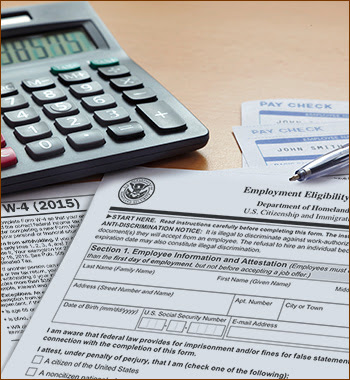
ArrowYour I-9 information. When you get the job, your new employer will have you fill out tax form I-9, Employment Eligibility Information. This is a legal requirement to show you have the right to work and it confirms your tax information. You will be asked to provide proof of identity, including showing your Social Security card.
ArrowYour W-4. You will also be asked to fill out a tax withholding form. This form gives employers instructions on how much they should withhold from your paycheck to send in to taxing authorities like the IRS. By filling out the form correctly, enough will be withheld from your pay to ensure you do not owe too much in tax when you file your tax return.
First Job Taxes
ArrowOther Taxes. You will notice your check amount is also reduced for your contributions to Social Security and Medicare. Your paycheck will be reduced by 6.2% for Social Security and 1.45% for Medicare payments. You are not in this alone. Your employer matches your payments and sends both of them to the government.
ArrowOn your own? If you start up your own summer business like mowing lawns or providing nanny services you will have tax obligations similar to those as an employee. In addition to income taxes, you will need to file estimated tax statements to cover Social Security and Medicare taxes. These two taxes amount to 15.3% of your net income so plan accordingly. But also remember to save receipts for your job related expenses. They can help reduce your taxable income.
ArrowTips are taxed. If you receive any tips, these too are taxable. Most employers that have tip-earning employees will help you file the appropriate forms. If they do not, you will need to ask for help to ensure your taxes are paid on your tip income.
ArrowReview your pay. Remember to review your initial paycheck. Often times there are errors in setting up employee records. Should you find an error or need an explanation, feel free to ask your employer for help. Errors not caught early can become expensive surprises later on during the year.
ArrowReview your tax-filing obligation. Remember to review the need to file a tax return at the end of the year, even if you do not owe tax. Often your W-2 has pay withheld from your check. If you do not file a tax return you cannot get excess withholdings paid back to you.
 

Five Interesting Consumer Inventions

Here are five inventions that have the potential to impact you and those you know during the upcoming year. Will they be in your near future?
One3-D printers. While the ability to print three-dimensional objects has been around for a while, the affordability and flexibility of recent offerings is making this invention more accessible. Now virtually anything can be created with these new devices. Things like plastic parts, toys, food, and even medical applications are being created with these printers.
3-D PrintingSmart Watches. From newcomer Pebble, to big manufacturers like Sony, Google, Microsoft, and Apple it seems like everyone is getting into the smart watch game. A smart watch puts popular phone technology onto your wrist. Besides telling time, this new device can set appointments, play music, and many other applications previously only found on computers, tablets, or smart phones.
RinglyRingly. An alternative to the smart watch is Ringly, a "smart" ring. The ring flashes different colors to alert you to an email, text, or message from someone you know. With this new development, your phone can stay in your purse until Ringly signals you someone important is trying to contact you.
Selfie StickSelfie-Stick. This new product is popping up all over. The selfie-stick allows you to attach an extension onto your phone to take the ultimate selfie photo. A simple button on the handle or on a remote allows for candid photos without the need of assistance.
3-D Gaming3D video gaming. Immersing yourself into your video world is now becoming a reality. 3D technology is moving to headgear that brings you into your gaming world. Are you ready to experience total immersion into your video games?
 

Change a Little... Save a Lot

Changing your financial situation can seem to be an overwhelming task. Like most large problems, the best way to address them is to break them down into smaller, more manageable problems. The same holds true with your financial well being. Here are five small ideas that can yield big results to help improve your financial health.
1Make incremental payments on debt as soon as possible. Make extra principal payments on your debt as often as possible and as soon as possible. The way bank amortization schedules work, you pay most of your interest during the early months of your loan repayment.
Example:
$200,000 loan; 30 years repayment; 4.5% interest.
The monthly payment is approximately $1,013.
PaymentInterestPrincipal
First$750$263
Last$4$1,009
Change a little, save a lot
2Cut out one annuity bill. Gone are the days when you buy something and then you are done. Now you pay a monthly fee for as long as you use a service. Examples of this are software licenses, cloud storage, television viewing, cell phone services and more. Why not cut out one such service. Put the savings aside for a better use.
3Eliminate one add-on service. Take a look at bills that have a number of add-on services. Cell phone and internet bills are likely candidates. Do you need that special cable package? Do you fully use your cell phone data plan? Look for ways to cut a little bit out of each of your bills.
4Pay yourself. When you pay your bills, pay yourself. Place the funds in a hard to reach banking account. Ideally one that does not have internet access. Set a financial goal for this money. It might be to pay for a fun vacation or a special purchase. You will receive a double benefit from this approach. One for hitting your savings goal and one for the joy of purchasing something you want without going into debt.
5Conduct a competitive review. Key suppliers rely on our inertia. When was the last time you reviewed your auto and home insurance? What about other service providers like cell phones or trash pick up. Choose a service and solicit three vendors to provide competitive quotes. Your current supplier might still be the best, but you will never know if you don't periodically check.
 

Financing for College? Be Creative.

Can you or your child manage to graduate from college without having a mountain of debt? The Federal statistics suggest it is unlikely. But if you are creative, perhaps you can reduce the financial burden you are facing.
Creative funding does not replace the basics
Remember to fill out the FAFSA and submit it on time. This is the federal blueprint to get your aid package. Also check reliable sources to ensure you are taking advantage of the common available support. High School guidance counselors and prospective colleges are great resources to help you understand what is available for you.
A web site like the non-profit Collegeboard.org is a great place to start. This site has resources to help walk you through the financial aid process and it has tools to help search for scholarships.
Tax Benefits of Being a Sole Proprietor
Some creative ideas
Here are some, beyond the obvious, ideas to help augment money to pay for school.
ArrowTutor. If you are good in math, writing, or any other subject consider tutoring others to earn some additional income. You can schedule this around your class time and can feel good about helping other students.
ArrowWork study. Some financial aid packages include a work study element. But if you don't qualify for traditional work study think creatively. Are there privately run businesses on or by campus? Perhaps the local coffee shop needs help. Is there a little retail store students go to for supplies? Go where the students go, they are targets for employment.
ArrowBe an entrepreneur. Campuses are like small towns. The students need services. Computer repair, transportation, hair services, running errands, and more. Is there a little business opportunity for you? If this is an avenue for you, make sure you understand the local rules for running your small service business.
ArrowLeverage your youth activity. If you danced or played soccer as a youth, consider offering your services as a paid teacher or coach. Local clubs and studios would love to have trained help in their organization. And if you have a passion for the activity, it is a great way to recharge.
ArrowSet up your own internship. Many schools will have programs to support internships with businesses. For every one formal program the school offers, there are hundreds of small businesses in the same field that could use the same type of help. Why not contact local businesses in the field of your choice. Perhaps it is a small accounting firm or a free-lance graphic design company. Can your graphic and web skills be used at a local business that cannot afford their own staff?
If you think creatively, there are many opportunities to reduce the financial burden of college. Just ensure the time spent in augmenting your finances does not get in the way of performing well in the classroom.
 
As always, should you have any questions or concerns regarding your situation please feel free to call.